Introduction to Graphitized Recarburizers:
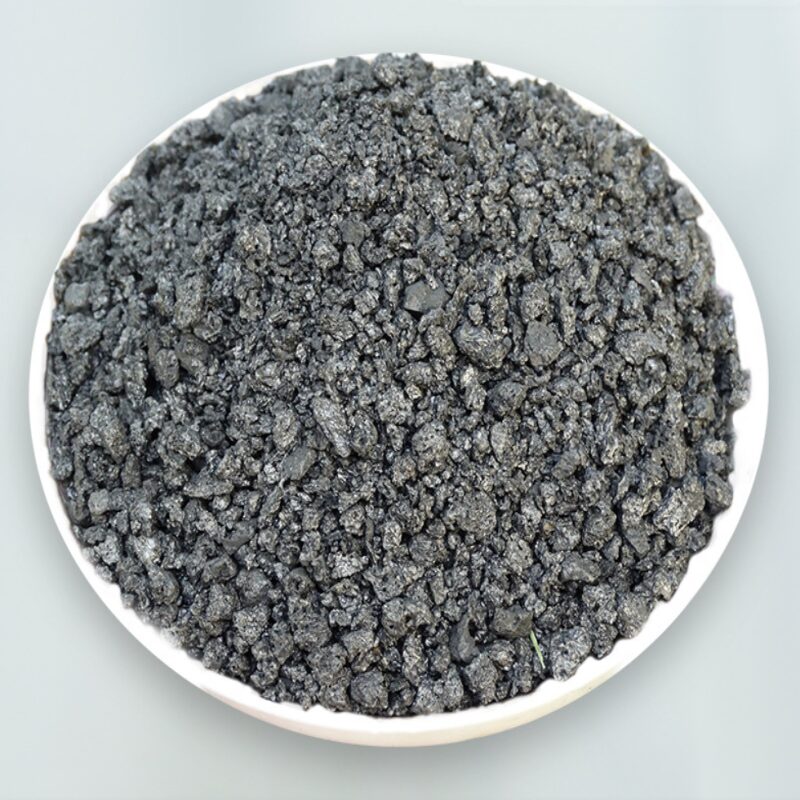
Graphitized Recarburizer (HS Code: 38249030) refers to a carbon-based product that has undergone a graphitization process. This process involves subjecting the carbon material to high temperatures—or other specific methods—to alter its molecular structure, resulting in a highly ordered, regular arrangement. In this specific molecular configuration, the intermolecular spacing between carbon atoms is wider, which significantly facilitates the dissolution and nucleation processes when the material is introduced into molten iron or steel. A wide variety of materials can serve as recarburizers for cast iron; commonly used options include artificial graphite, calcined petroleum coke, natural graphite, metallurgical coke, anthracite, and blends formulated from these materials. Graphitized recarburizers are primarily utilized in electric furnace smelting operations, enabling the production of high-quality molten iron through carburization while minimizing—or even completely eliminating—the need for pig iron additions.
Graphitized Recarburizer Specifications:
The key specifications for graphitized recarburizers are typically as follows: moisture content of less than 2%, sulfur content of less than 0.10%, phosphorus content ranging from 0.01% to 0.04%, and hydrogen/nitrogen content ranging from 120 to 180 ppm. Commercially available products are often produced by compressing graphite powder into specific shapes; however, this production method typically necessitates the addition of excessive binding agents to facilitate molding. In contrast, high-carbon graphitized recarburizers designed for steelmaking feature moderate particle sizes and relatively high porosity, resulting in rapid absorption rates. Furthermore, due to their high chemical purity, these materials exhibit exceptionally high carbon absorption efficiency. Available particle size ranges include 0–5 mm, 1–5 mm, 0–10 mm, and others; specific particle sizes can be processed and produced according to individual customer requirements.
Graphitized Recarburizer Production Process:
A graphitized recarburizer is the final product obtained by subjecting petroleum coke to high-temperature treatment to induce graphitization. Graphitized petroleum coke is produced by placing petroleum coke into a graphitization furnace—typically utilizing Acheson furnace equipment. In this process, baked carbon materials are laid out between the conductive electrodes at the head and tail of the furnace to serve as conductive heating cores; specifically, a layer of baked carbon material is positioned between each corresponding pair of electrodes to act as the heating element. Following high-temperature treatment at approximately 3000°C, the disordered, layered carbon crystal structure of the petroleum coke transforms into a hexagonal, layered carbon structure—essentially converting the petroleum coke into graphite. This entire process is known as graphitization. The petroleum coke that has undergone this graphitization treatment is referred to as graphitized petroleum coke.
Applications of Graphitized Recarburizers:
1. Graphitized recarburizers serve as excellent carbon-enhancing agents for metallurgical smelting operations.
2. Through further deep processing, graphitized recarburizers can be utilized to produce anode materials for lithium-ion batteries, stabilizers for pyrotechnic materials in the defense industry, and similar products.
3. They also find application in various other fields, including as reducing agents in the chemical industry, as reducing inoculants in foundry operations, and in the manufacture of refractory materials.
Distinctions Between Graphitized Recarburizers and Other Recarburizers:
Graphitized recarburizers are produced within a graphitization furnace at temperatures of approximately 3000°C. Typically, the fixed carbon content of graphitized recarburizers stands at around 98%, with high-grade varieties reaching up to 99%. The sulfur content generally ranges between 0.03% and 0.06%, while the carbon absorption rate typically falls between 90% and 95%. Furthermore, the processing duration required for graphitized recarburizers within the smelting environment is longer than that for other types of recarburizers. The graphitization process effectively reduces the impurity levels within the material, thereby increasing its carbon content and lowering its sulfur content. Although the unit price of graphitized recarburizers is comparatively higher than that of other recarburizers, when evaluated in terms of overall usage costs, choosing graphitized recarburizers proves to be the more economically sound decision.